

Blog
Welcome to the BioPartners Blog — your source for expert insights, industry updates, scientific perspectives, and real-world lessons from the front lines of clinical research.
Designing Effective Biomarker Studies for Medical Device Evaluations
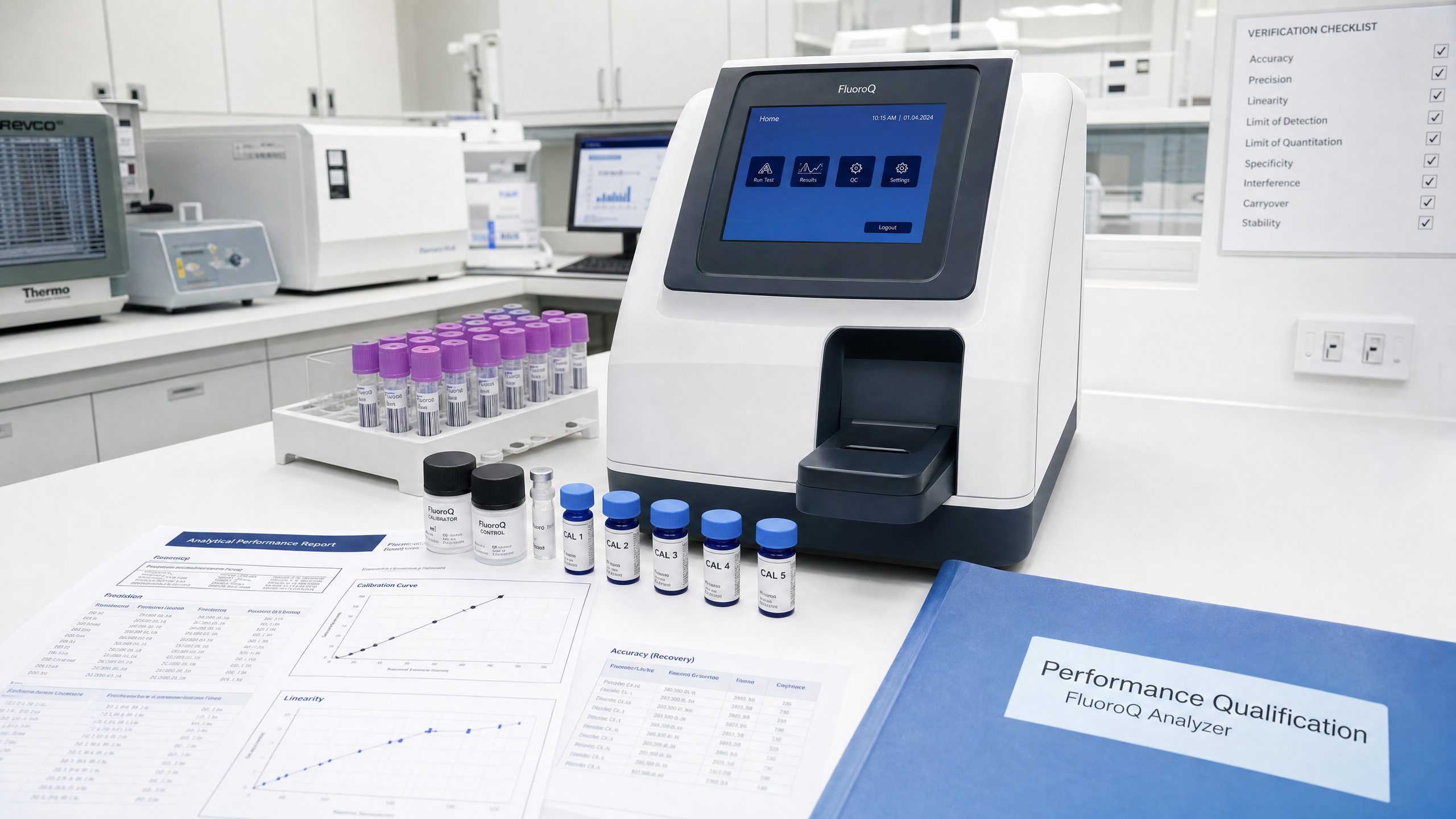
The development of a medical device that relies on a biomarker for its intended function—whether for diagnosis, monitoring, or patient selection—is a scientifically demanding undertaking. The study design phase is arguably the most critical step in the entire development process. A poorly designed biomarker study for medical device evaluations will generate data that is unreliable, uninterpretable, or unacceptable to regulatory agencies, wasting significant time and resources.
This guide outlines the five essential principles that sponsors and device developers must address when designing effective biomarker studies for medical device evaluations.
1. Define Analytical vs. Clinical Objectives Clearly
The first step in any study design is a precise definition of the objectives. In the context of medical device evaluations, these objectives generally fall into two categories: analytical performance and clinical performance.
Analytical Performance: Does the device accurately and reliably measure the biomarker? The study must be designed to assess precision, accuracy, limit of detection, and susceptibility to interferences.
Clinical Performance: Does the measurement of the biomarker correlate with the target clinical condition? The study must establish diagnostic sensitivity, diagnostic specificity, and predictive values within the intended patient population.
Failing to distinguish between these objectives—or attempting to answer both with a single, inadequately powered cohort—is a common pitfall. A robust design clearly delineates the phases of evaluation, often starting with analytical validation using characterized biospecimens before moving to prospective clinical performance studies.
2. Address Pre-Analytical Variables Early
In biomarker research, the integrity of the data is entirely dependent on the quality of the biospecimen. Pre-analytical variables—factors that affect the sample before it is ever analyzed by the device—are a major source of error.
When designing the study, protocols must explicitly define the specific tubes or collection devices to be used, processing and handling requirements including centrifugation timelines and acceptable temperature ranges, and storage conditions including maximum acceptable freeze-thaw cycles. Standard Operating Procedures (SOPs) for sample handling must be validated and rigorously enforced across all collection sites to ensure that the biomarker remains stable and the device evaluation is not confounded by degraded samples.
3. Ensure Representative Patient Cohorts
A medical device must be evaluated in the population for which it is intended to be used. A study design that relies on highly homogenous, “perfect” patient cohorts will fail to capture the biological variability present in the real world, leading to a device that performs poorly in clinical practice.
The study protocol must specify clear inclusion and exclusion criteria that reflect the intended use population. Crucially, the design must also include appropriate control groups. Depending on the device, this may mean including healthy volunteers, patients with benign conditions that mimic the target disease, or patients with known comorbidities that could cause analytical interference.
4. Determine the Appropriate Reference Standard
To evaluate the performance of a new diagnostic device, its results must be compared against a recognized truth—the reference standard (often called the “gold standard”).
Selecting the correct reference standard is critical. If the new device is being evaluated against an existing, flawed standard, the study data will be inherently compromised. The study design must clearly identify the comparative method, whether it is an existing cleared assay, a composite clinical diagnosis, or a specific reference measurement procedure. The statistical analysis plan must then detail exactly how concordance or agreement between the new device and the reference standard will be calculated.
5. Partner with an Integrated CRO and Clinical Site
Designing a flawless protocol is only half the battle; executing it with precision is the other. Traditional models, where a sponsor hires a CRO who then subcontracts to multiple independent clinical sites, often struggle to maintain the strict operational control required for complex biomarker studies.
BioPartners offers a superior approach through our integrated CRO and clinical site model. By combining strategic CRO oversight with the hands-on execution capabilities of our active clinical research site in California, we eliminate the operational gaps that derail device evaluations.
Our seamless protocol execution ensures that complex sample collection and processing protocols are executed flawlessly, minimizing pre-analytical errors. Our actively enrolling site allows us to efficiently recruit the specific, diverse patient cohorts required for robust clinical performance studies. We maintain an unbroken chain of custody and rigorous quality oversight, delivering the high-quality biospecimens and reliable data needed for FDA and CE mark submissions.
Contact BioPartners to discuss how our integrated model can support your next medical device biomarker study from protocol design through final data delivery.