

Blog
Welcome to the BioPartners Blog — your source for expert insights, industry updates, scientific perspectives, and real-world lessons from the front lines of clinical research.
The Importance of Custom Biospecimen Collections in Assay Development
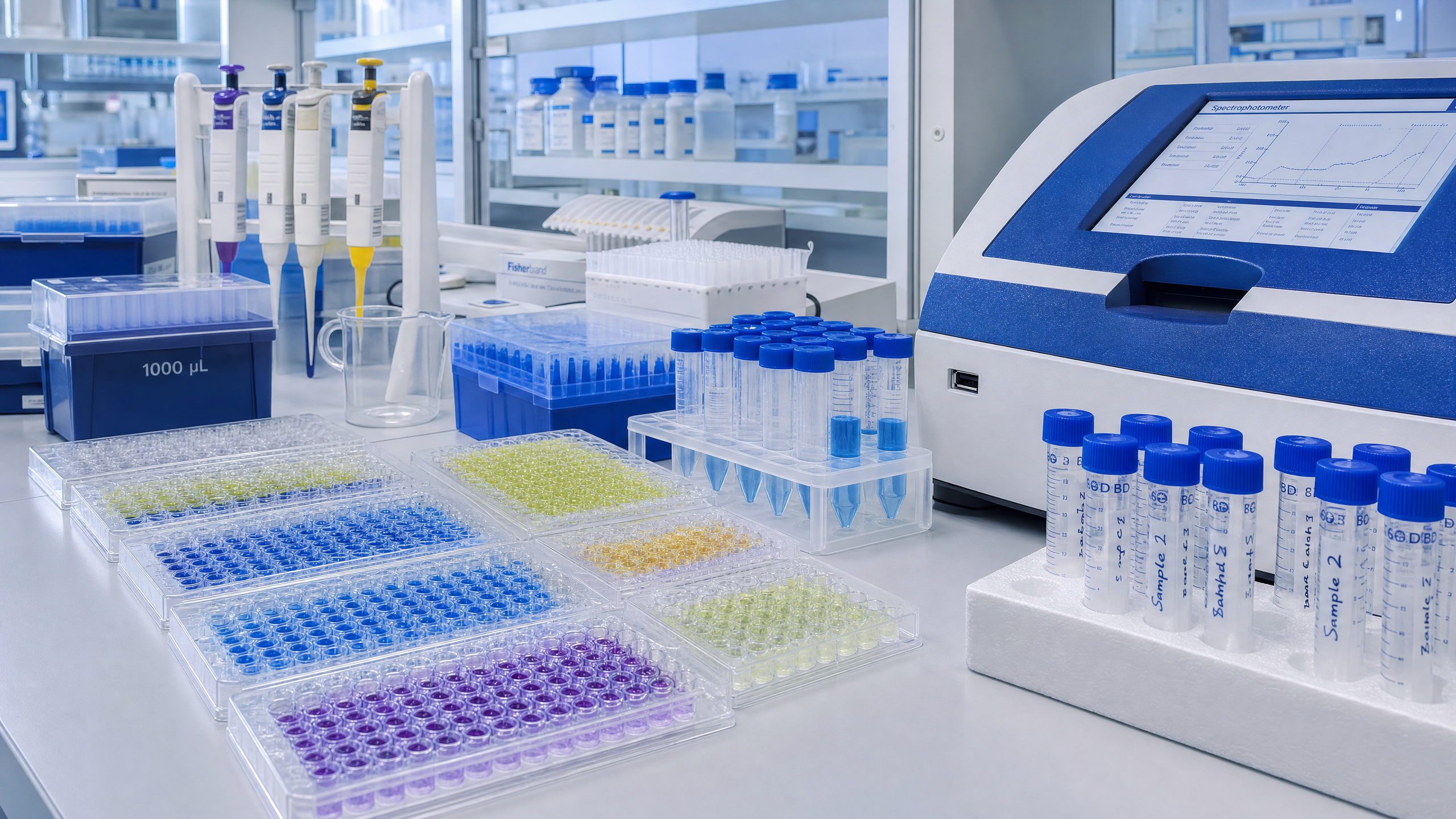
In the competitive landscape of in vitro diagnostic (IVD) development, the quality of an assay is only as good as the samples used to develop and validate it. While commercially available biobanks serve a valuable purpose in early-stage research, they frequently fall short when it comes to the rigorous demands of advanced assay development and regulatory submission.
To ensure an assay is robust, accurate, and ready for the clinic, developers increasingly rely on custom biospecimen collections. This article explores why bespoke sample cohorts are essential for diagnostic development and how they mitigate the risks associated with generic biobank samples.
The Limitations of Off-the-Shelf Biospecimens
Commercial biobanks offer vast repositories of retrospective samples, which are invaluable for initial biomarker screening. However, these off-the-shelf samples come with inherent limitations for late-stage assay development.
The specific conditions under which a banked sample was collected, processed, and stored are often not fully documented. Variations in cold ischemia time, centrifugation speeds, or storage temperatures can degrade delicate biomarkers, leading to inaccurate assay performance data. Banked samples may also lack the granular clinical data required for thorough validation, including specific comorbidities, concomitant medications, or exact disease staging. Additionally, an assay developer may require a specific sample matrix or collection volume that is simply not available in an existing retrospective bank.
The Strategic Advantage of Custom Collections
Custom biospecimen collections are prospectively designed and executed to meet the exact specifications of the assay developer. This bespoke approach offers several critical advantages.
1. Total Control Over Pre-Analytical Variables
With a custom collection, the sponsor defines the exact Standard Operating Procedures (SOPs) for sample acquisition. The developer dictates the specific collection tubes, the precise processing timelines, and the freezing protocols. This rigorous control minimizes pre-analytical variability, ensuring that the assay is evaluated against the biomarker itself, not against artifacts introduced by poor sample handling.
2. Targeted Patient Cohorts and Matched Sets
Custom collections allow developers to recruit the exact patient populations required for their intended use case. This includes not only the target disease cohort but also highly specific control groups, such as patients with confounding conditions that might cause cross-reactivity. Furthermore, custom collections enable the acquisition of matched sample sets—for example, matched serum, plasma, and tissue from the same patient at the same time point—which are essential for comparing biomarker expression across different matrices.
3. Longitudinal Sampling
Many diagnostic assays, particularly those used for monitoring disease progression or treatment response, require longitudinal validation. Custom collections can be designed to follow specific patients over time, collecting serial samples at predefined intervals to evaluate how the biomarker fluctuates in response to clinical events.
4. Regulatory Readiness
Regulatory bodies, including the FDA and European Notified Bodies under the IVDR, require exhaustive documentation of the samples used in analytical and clinical performance studies. Custom collections provide a complete, unbroken chain of custody and comprehensive clinical metadata, ensuring that the data package is audit-ready and capable of withstanding regulatory scrutiny.
Executing Custom Collections with BioPartners
Executing a custom biospecimen collection requires a partner with both clinical access and rigorous operational oversight. Traditional models often struggle here, as CROs must rely on disparate third-party sites that may inconsistently apply custom protocols.
BioPartners solves this challenge through our integrated CRO and clinical site model. Because we directly manage the clinical research site in California, we offer sponsors unparalleled control over their custom collections. Our clinical staff are trained directly by our CRO experts to execute complex, custom processing SOPs flawlessly. Our active site allows us to efficiently identify and enroll the specific patient profiles required for your bespoke cohort. From the moment of patient consent to the final shipment of the biospecimen, BioPartners maintains strict quality oversight, delivering the precise, high-quality samples required to validate your assay with confidence.
Contact BioPartners to discuss how a custom biospecimen collection program can accelerate your assay development timeline and strengthen your regulatory submission.