

Blog
Welcome to the BioPartners Blog — your source for expert insights, industry updates, scientific perspectives, and real-world lessons from the front lines of clinical research.
The Role of High-Quality Biospecimens in Real-World Evidence Programs
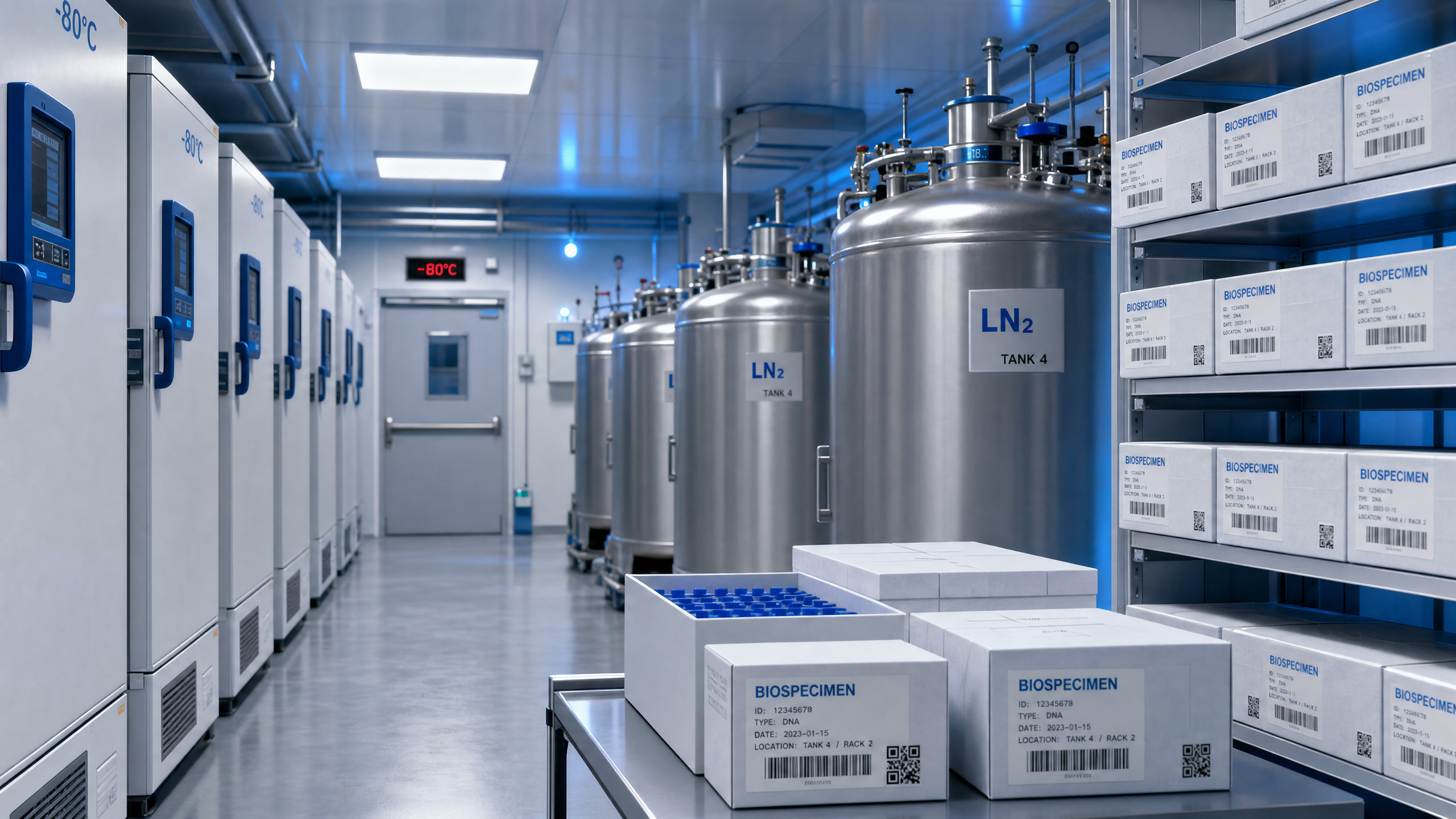
Real-World Evidence (RWE) has emerged as one of the most transformative forces in modern healthcare and medical product development. Regulatory agencies, including the FDA and EMA, increasingly accept RWE to support regulatory decisions, and monitor post-market safety. In the realm of biomarker research and in vitro diagnostics (IVDs), the integration of high-quality biospecimens into RWE programs is unlocking unprecedented insights into disease biology and diagnostic performance.
Understanding Real-World Data and Evidence
Real-World Data encompasses a wide variety of information gathered from routine healthcare delivery. This includes data from electronic health records (EHRs), medical claims and billing databases, product and disease registries, and patient-generated data from in-home use settings.
Real-World Evidence is the clinical evidence regarding the usage and potential benefits or risks of a medical product derived from the analysis of RWD. For diagnostic developers and biomarker researchers, RWE provides a critical window into how a test performs across diverse, unselected patient populations, capturing variables such as comorbidities, concomitant medications, and varied sample handling conditions that are often tightly controlled or excluded in early-phase studies.
The Intersection of RWE and Biospecimens
While much of the conversation around RWE focuses on digital health records, the physical biological sample—the biospecimen—is equally vital. Retrospective and prospective biospecimen collections are the tangible foundation upon which molecular real-world evidence is built.
1. Validating Biomarkers in Diverse Populations
Early biomarker discovery often relies on highly curated, homogenous sample sets. However, for a biomarker to be clinically useful, its performance must be validated across the heterogeneity of the general population. RWE programs utilizing prospectively collected biospecimens allow researchers to assess biomarker prevalence, diagnostic accuracy, and prognostic value across diverse demographic and clinical profiles.
2. Post-Market Performance Follow-up (PMPF)
Under stringent new regulations like the European IVDR, diagnostic manufacturers must continuously monitor the performance of their devices post-market. RWE programs that incorporate the collection of remnant diagnostic specimens or prospective samples from routine clinical care are essential for fulfilling these PMPF obligations. This data confirms that the device continues to perform safely and effectively in the real world.
3. Accelerating Assay Development and Repurposing
Access to well-annotated biobanks containing samples linked to longitudinal clinical data allows developers to rapidly test new hypotheses. If a developer wishes to expand the intended use of an existing diagnostic assay to a new indication, analyzing retrospective biospecimens linked to real-world clinical outcomes can provide the necessary proof-of-concept data much faster than initiating a new prospective trial.
The Challenge of Quality in Real-World Biospecimens
The primary challenge in utilizing biospecimens for RWE is ensuring quality and consistency. Unlike the strict protocols of an RCT, real-world clinical settings can introduce significant pre-analytical variability. Differences in how a blood draw is performed, the time a sample sits before processing, and the temperature at which it is stored can all alter molecular profiles and skew analytical results.
To generate reliable RWE, the biospecimens must be accompanied by comprehensive, accurate clinical metadata. A sample is only as valuable as the data attached to it. Researchers need detailed information regarding patient demographics, disease stage, treatment history, and precise sample processing timelines.
Ensuring Quality Through an Integrated CRO and Clinical Site Model
To mitigate the risks of pre-analytical variability in RWE programs, sponsors must partner with organizations capable of enforcing strict quality controls even in real-world collection scenarios.
BioPartners offers a distinct advantage in this arena through our integrated CRO and clinical research site model. Because we manage both the operational oversight (the CRO) and the actual patient interaction and sample collection (the clinical site), we maintain an unbroken chain of custody and quality.
Our standardized collection workflows are governed by validated SOPs and calibrated equipment, ensuring that even prospectively collected real-world samples meet stringent stability and reproducibility standards. We ensure every biospecimen is paired with the detailed clinical information and processing records required for robust RWE analysis. Our active clinical site in California allows us to rapidly enroll specific patient populations, providing sponsors with the exact cohorts needed for their real-world studies.
Partnering for RWE Success
The value of RWE is directly proportional to the quality of the underlying data and biospecimens. As the industry’s reliance on real-world data grows, the ability to generate high-quality, well-annotated biospecimen collections in a real-world clinical setting becomes a critical competitive advantage for sponsors and developers.
BioPartners is uniquely positioned to support this need. Our integrated model bridges the gap between the rigorous quality standards of a clinical trial and the real-world context that makes RWE so powerful. Contact us to learn how we can design a biospecimen collection program that meets your RWE objectives.